

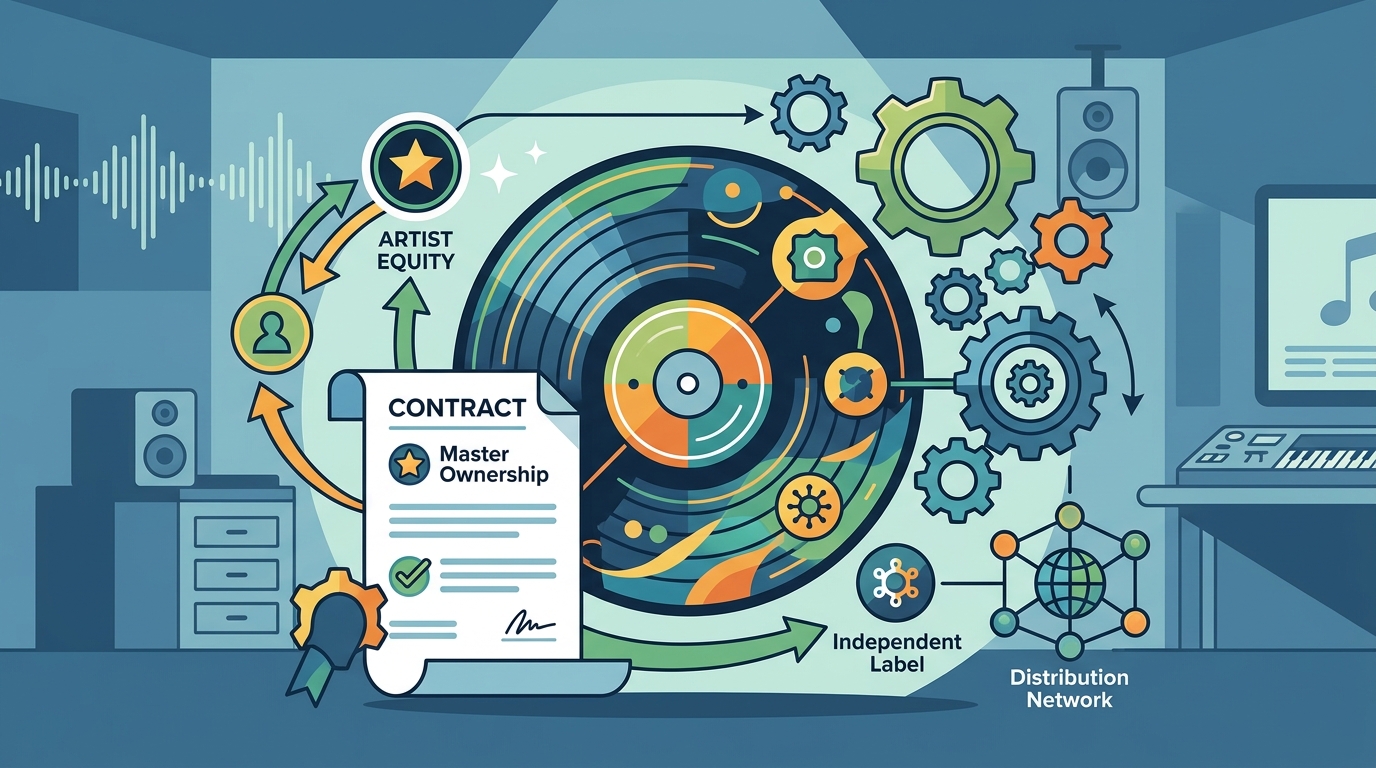
Independent labels manage artists by providing strategic promotion, distribution, and business development services while explicitly contracting to leave master recording ownership with the artist. This model, often called a 360-degree service agreement or a non-exclusive distribution deal, allows creators to retain long-term equity in their catalog. Fortunate 1 Music & Entertainment operates within this ecosystem, focusing on talent development and promotion rather than traditional ownership-based exploitation.
The Shift from Ownership to Service
Traditional major label contracts historically required artists to assign their master recordings to the label in exchange for an advance and marketing support. This model created a power imbalance where the label held the asset and the artist held the labor. The modern independent label model has shifted toward a service-based approach. In this structure, the label acts as a partner rather than a landlord. They provide the infrastructure, such as distribution to streaming platforms and sync licensing outreach, but the artist retains the intellectual property rights to the underlying masters. For additional details, review the .
This shift is driven by the democratization of music distribution. Digital platforms allow artists to release music directly to consumers without a physical intermediary. Consequently, the value of a label has moved from physical distribution to strategic curation and audience building. An independent label that does not take ownership of masters must prove its value through measurable growth in streams, fan engagement, and brand partnerships. This creates a performance-based relationship where the label's revenue is tied to the artist's success, not the sale of the asset. For additional details, review the Customer Experience.
Contractual Structures for Retaining Masters
There are several specific contractual frameworks that allow artists to keep their masters while still receiving label support. The most common is the non-exclusive distribution agreement. In this deal, the label distributes the music but does not claim ownership of the copyright. The artist pays a fee or shares a percentage of royalties, but the master remains the artist's property. Another structure is the 360-degree service agreement. Here, the label provides a full suite of services, including management, marketing, and touring support, in exchange for a percentage of all income streams, but the master copyright is never transferred. For additional details, review the Frequently Asked Questions.
It is critical for artists to distinguish between a license and an assignment. A license grants the label the right to use the master for a specific period or purpose, but ownership stays with the artist. An assignment transfers ownership permanently. Many independent labels use limited-term licenses to avoid the legal complexity of permanent ownership transfers. This allows the label to promote the music effectively while respecting the artist's long-term asset value. Artists should always consult with legal counsel to ensure their contracts clearly define the scope of the license and the reversion of rights upon termination.
Revenue Models in Non-Ownership Deals
When a label does not own the masters, it must generate revenue through alternative means. The primary model is royalty sharing. The label takes a percentage of the net royalties generated from streaming, downloads, and physical sales. This percentage is typically higher than in traditional ownership deals because the label is not taking on the risk of owning the asset. For example, a label might take 50% of net royalties in a non-exclusive deal, whereas a traditional label might take 100% of the royalties until the advance is recouped, then 50% thereafter.
Another revenue stream is service fees. Some independent labels charge a flat monthly fee for their promotional and management services. This model aligns the label's incentives with the artist's desire for consistent support without the label taking a cut of the artist's long-term equity. Additionally, labels may earn revenue from sync licensing. When a song is placed in a film, TV show, or commercial, the label may take a percentage of the sync fee. This allows the label to monetize the artist's catalog without owning the underlying copyright. These models create a sustainable business for the label while preserving the artist's asset base.
Strategic Promotion and Audience Building
The core value of an independent label in a non-ownership model is its ability to build an audience. Labels provide strategic promotion through social media management, playlist pitching, and press outreach. They leverage their industry connections to secure placements in curated playlists and media outlets. This exposure drives streams and sales, which in turn generate revenue for both the artist and the label. The label's success is measured by the growth of the artist's fanbase, not by the sale of the master recordings.
Key Takeaways
- Independent labels can manage artists without owning masters by using service-based contracts.
- Non-exclusive distribution agreements allow labels to distribute music while artists retain copyright.
- Revenue for non-ownership labels comes from royalty sharing, service fees, and sync licensing.
- Artists must distinguish between licenses and assignments to protect their long-term asset value.
- The value of modern labels lies in audience building and strategic promotion, not physical distribution.
Frequently Asked Questions
What is a non-exclusive distribution deal?
A non-exclusive distribution deal is a contract where a label distributes an artist's music without taking ownership of the master recordings. The artist retains the copyright and pays the label a fee or shares royalties.
Do independent labels still take advances?
How do labels make money without owning masters?
Labels make money through royalty sharing, service fees, and sync licensing. They take a percentage of the income generated by the artist's music or charge a flat fee for their promotional services.
Is it better to keep my masters or sell them?
Keeping your masters is generally better for long-term wealth building. Masters are a valuable asset that can generate income for decades. Selling them provides a lump sum but sacrifices future earnings.
What should I look for in a label contract?
Look for clear language regarding copyright ownership, the scope of the license, and the reversion of rights. Ensure the contract specifies that the label does not take ownership of the master recordings.